
Dead Man’s Finger


Dead Man’s Finger
Xylaria Polymorpha: Saprobic Fungus
Photo/Unsplash
“ Plants and mushrooms have intelligence and they want us to take care of the environment. They want to communicate that to us in a way we can understand .”-Paul Stamets

Fungi are eukaryotic organisms that include microorganisms such as yeasts, molds, and mushrooms. They can be classified into four divisions as follows:

1. Chytridiomycota (Chytrids)
2. Zygomycota (Bread molds)
3. Ascomycota (Yeasts and sac fungi)
4. Basidiomycota (Club fungi)

Some fungi are capable of causing superficial, cutaneous, subcutaneous, or systemic diseases.

Dead Man’s Fingers

Xylaria polymorpha, Dead Man’s Fingers, is a saprobic fungus commonly found in forests on decaying wood, injured trees, stumps, and woodland areas. It resembles burned wood and is polymorphic, existing in many forms.

The scientific classification of Xylaria Polymorpha is shown below-

Scientific classification of Xylaria Polymorpha

Domain: Eukaryota

Kingdom: Fungi

Division: Ascomycota

Class : Sordariomycetes

Order: Xylariales

Family: Xylariaceae

Genus: Xylaria

Species: X.polymorpha
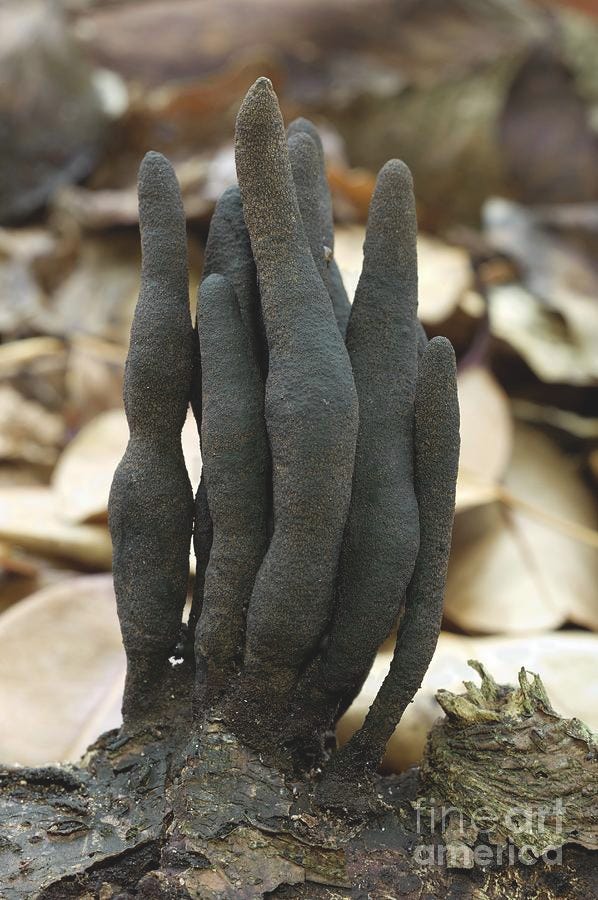
Image Source

It is black with a distorted, club-like, finger-shaped, wrinkled, charcoal-like surface. It is not edible. The fruiting body has a width of 1/2–1/4 inches and a height of 1/2–3 inches.
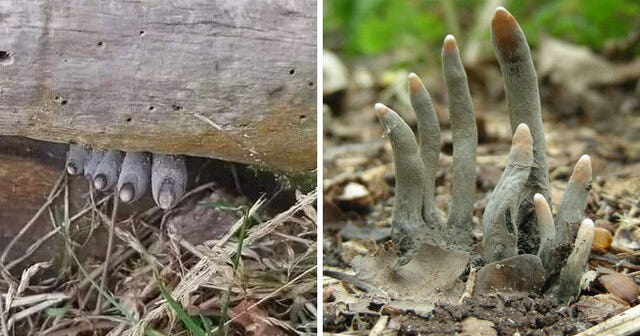
Image Source

It is a fungal pathogen that grows in small clusters of three to six mushrooms, resembling fingers emerging from the ground. Each “finger” is about 1–3 cm in diameter and can reach a height of 3–8 cm. In its early stages, it appears white, but as it matures, it takes on a black color. This fungus is considered a relatively weak pathogen, primarily affecting stressed trees.
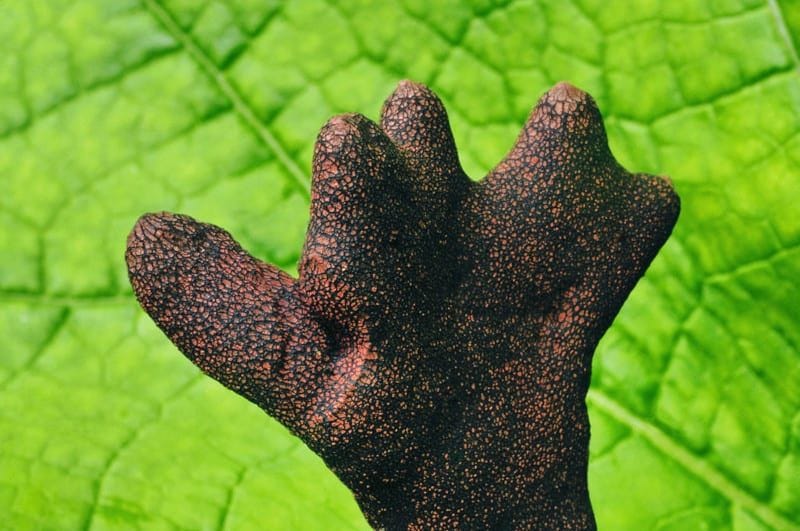
Image Source 

Fungi play a crucial role in maintaining a healthy ecosystem by decomposing the tough material that wood is made of, thereby cleaning the forest and facilitating the return of nutrients back into the soil.

References :

Phillips, Roger ( 2010). mushrooms and other Fungi of North America. Buffalo, NY: Firefly Books.p.375. ISBN 987–1–55407–651–2.


Comments

Popular posts from this blog

Red Biotechnology

  20 Major Applications Of Red Biotechnology Red Biotechnology is a branch of modern biotechnology T he term Biotechnology was introduced by a Hungarian engineer, Karl Ereky in 1917. Ereky defined biotechnology as “ all lines of work by which products are produced from raw materials with the aid of living things”. Biotechnology is a multidisciplinary application. Biotechnological research has a wide range of applications that are shown in medical and health science, agriculture science, and environmental science. Bio-Pharmaceutical is known as Red- Biotechnology. This branch of biotechnology is related to health care. The main utilization of this branch is shown in the field of medicine. Red biotechnology helps to improve the quality of life. Red-Biotechnology has a wide range of applications. Many applications are shown in medical and health science, genetic engineering, gene therapy, and many more fields related to the medical line. 20 Major Applications of Red Biotechnology are...

Green biotechnology

  17 Most Important Applications Of Green biotechnology Agrobiotechnology  Green biotechnology related to plants of improving both the quality and quantity of plants. The main goal of green biotechnology is the production of an improved variety of plants, with the help of biotechnology-based techniques that should be environmentally friendly solutions.  The main aim of green biotechnology is to tackle food security issues and reduce the environmental footprint of the industry. Green biotechnology can improve the global food situation.  17 Most Important Applications Of Green Biotechnology :  1. Micropropagation  One of the most important applications of green biotechnology is the micropropagation of plant species. this technique has attained the status of a large plant-based industry. Micropropagation is the true type of propagation of selected genotypes using small pieces of tissues which can stay as an important technique for rapid production of many...

20 medicinal plant species used for the production of secondary metabolites

  Secondary metabolites obtained from medicinal plant species by using Tissue culture Techniques 20 medicinal plant species used for the production of secondary metabolites P lants play a dominant role in the introduction of new therapeutics agents and also drugs from the higher plants continue to occupy an important niche in modern medicine. Pharmaceuticals companies depend largely upon materials procured from naturally occurring strands that are being rapidly depleted because of the use of parts like roots, barks, wood, stem, and the whole plant in the case of herbs. This poses a definite threat to the genetic stocks and the diversity of medicinal plants.  Plant tissue culture is an alternative method of propagation and is being used widely for the commercial propagation of a large number of plant species, including many medicinal plants. For some years, there has been great interest in the exploitation of plant cell cultures to produce fine chemicals. Plant material enriche...